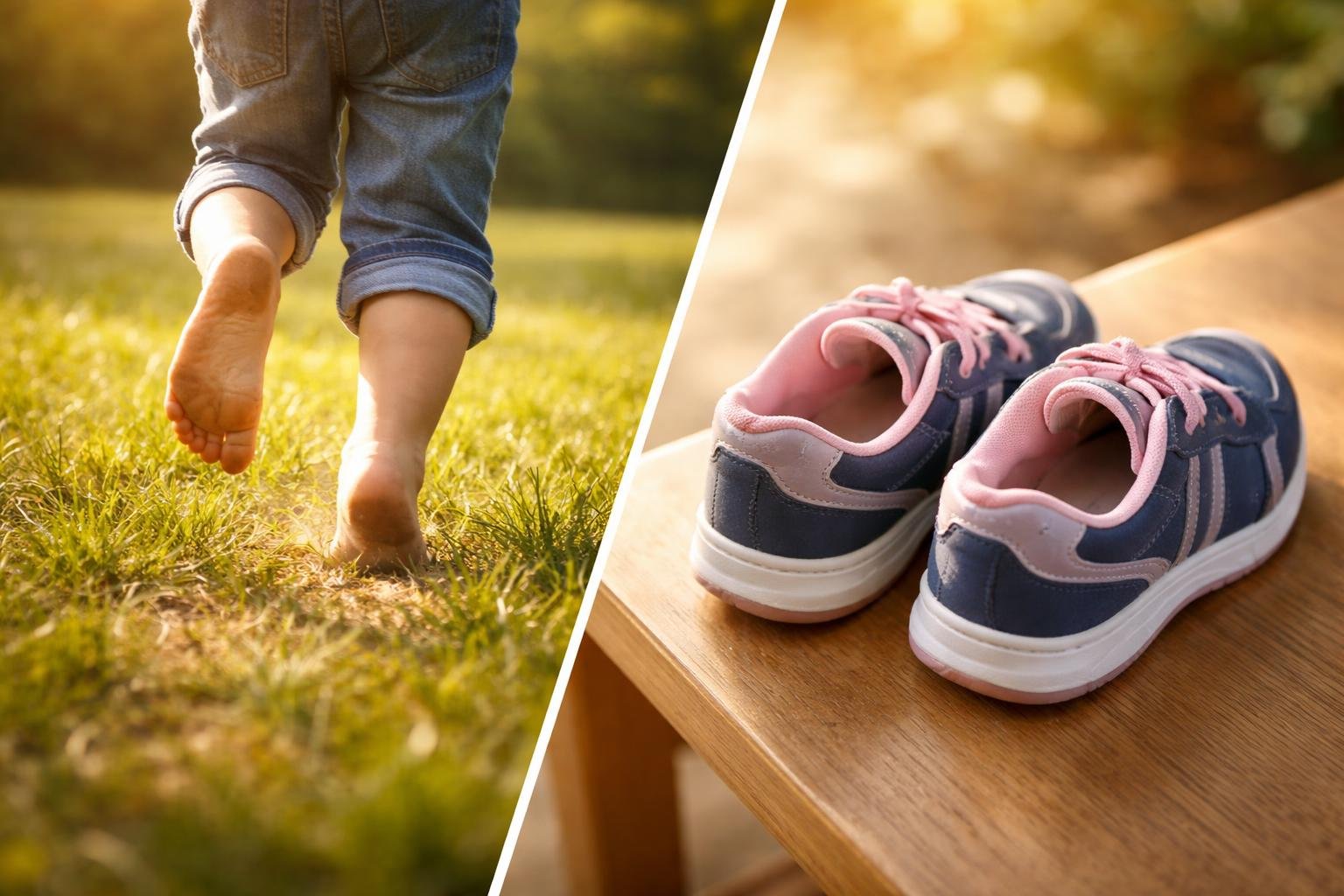
Tiny feet carry big dreams—and, as it turns out, big questions. Parents around the world are wondering what’s best for their children’s developing feet: barefoot-style shoes that mimic natural movement, or structured, supinated models promising extra support and correction. The debate is lively, the opinions are strong, and the science is still evolving. In the meantime, kids are simply busy running, climbing, and jumping—often oblivious to the tiny footwear war happening over their toes.
Welcome to the world of mezítlábas szabadság—barefoot freedom—and its more serious cousin, the szupinált (supinated) shoe. One side celebrates flexibility and natural development; the other stands firm on support, stability, and prevention of future problems. Both claim to protect your child’s health and comfort, and both can sound convincing—especially when wrapped in medical jargon or clever marketing.
This article takes you through the heart of the discussion in clear, friendly language. We’ll explore why footwear matters in childhood, what barefoot and supinated shoes really do, and how you can make sense of conflicting advice. No panic, no guilt—just information, sprinkled with a bit of creativity and a lot of common sense.
Tiny Toes, Big Debate: Shoes vs. No Shoes
The human foot is a tiny engineering miracle: 26 bones, 33 joints, and more than 100 muscles, tendons, and ligaments—all learning to work together from your child’s first wobbly steps. Every step is a mini workout, shaping arches, strengthening muscles, and refining balance. Whether those steps happen in socks, shoes, or completely barefoot can influence how this delicate system grows and adapts.
For generations, many pediatricians and shoe brands promoted firm, supportive footwear for children—especially if feet looked “flat.” The idea was simple: young feet need help; shoes should guide and correct. Supinated models, with raised outer sides and reinforced heels, came to the rescue, marketed as a preventive solution for flat feet, in-toeing, and future knee or back problems. Parents, understandably cautious, often embraced these shoes like a medical prescription rather than a fashion choice.
At the same time, another narrative has been gaining ground: maybe children need less shoe, not more. Studies of barefoot populations and minimalist footwear suggest that feet can grow strong and stable when they’re allowed to move freely and feel the ground. Suddenly “no shoes,” or at least “barefoot shoes,” no longer sounds like neglect—it sounds like nature’s original design. Caught between these two philosophies, parents are left holding a tiny sneaker in one hand and a barefoot sandal in the other, wondering which path to choose.
Barefoot Freedom or Super Support for Kids?
Barefoot-style shoes are like a handshake with the ground: thin soles, wide toe boxes, zero heel elevation, and flexible materials. Their mission is not to control the foot, but to get out of the way. The toes can spread, the arch can rise and fall, and the small stabilizing muscles must actually do their job. This can support better balance, more agile movement, and a more natural gait—especially in playful environments where kids climb, run, and squat like tiny athletes.
Supinated shoes, on the other hand, are like a miniature exoskeleton. They come with firm heel counters, shaped insoles, and built-in support on the outer edge of the foot. They are designed with the idea of “holding” the foot in an ideal alignment and correcting tendencies toward inward collapse or flat arches. For children with diagnosed structural issues or specific orthopedic recommendations, this extra support can be helpful in certain phases—especially when guided by a skilled professional who regularly reassesses the child’s progress.
The tension between these two approaches boils down to a question: should we train children’s feet to be strong on their own, or protect and guide them with external support? Barefoot advocates argue that constant bracing can make feet “lazy,” while proponents of supinated shoes worry that unstructured freedom allows faulty patterns to become fixed. The reality is likely not all-or-nothing. Both barefoot-style and supportive options have their place; the art lies in matching the shoe to the child, the activity, and the specific needs—not to a trend or a fear.
Finding Balance Between Nature and Orthopedics
Choosing shoes for your child doesn’t have to feel like picking a side in a philosophical war. Instead, think of it as finding the right mix of nature and guidance. For many healthy children without serious orthopedic issues, a mostly barefoot or barefoot-style lifestyle—especially at home, in the garden, and on safe, varied surfaces—can give feet exactly the kind of training they need: freedom to move, grip, flex, and feel. Nature is an excellent personal trainer when you let it work.
There are, however, children who genuinely benefit from more structure: significant asymmetries, neuromuscular conditions, or pronounced, symptomatic flat feet may call for temporary or long-term orthopedic interventions, including supinated or custom shoes. In these cases, the most important voice is not a brand’s advertisement but a qualified specialist—ideally one who examines the child in motion, looks at posture as a whole, and is willing to revisit the plan as the child grows. Even then, supportive shoes should be part of a broader strategy including exercises, play-based strengthening, and sometimes physiotherapy—not a standalone magic fix.
For day-to-day life, a practical rule of thumb is “variety and observation.” Let your child go barefoot where it’s safe, choose flexible, spacious shoes for most activities, and reserve more structured models for situations where a trusted professional clearly recommends them. Watch how your child moves: Are they clumsy or in pain? Do they tire quickly? Do they avoid running or complain about ankles, knees, or hips? These real-world signals are more meaningful than any shoe label. In the end, your goal is simple and beautiful: feet that are strong enough to run toward their dreams—whether they’re wrapped in barefoot freedom, super support, or a thoughtful combination of both.
The barefoot vs. supinated shoe debate won’t be settled by one article, one trend, or one brand—but it can be softened by common sense. Children’s feet are living, changing, learning structures, not problems waiting to be fixed. When we respect their natural development, use support wisely, and stay curious rather than fearful, we give our kids the best chance at healthy, happy movement. Every hop, skip, and jump is part of that story—and the right shoe is simply a supporting character, not the main hero.